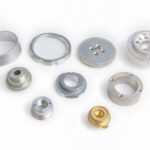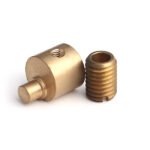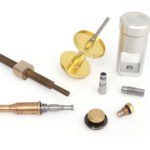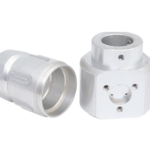


The CNC turning and milling composite processing series for shaft-type components is a type of nut that is suitable for welding on the outside. It is typically made from weldable materials and is relatively thick, making it suitable for welding. Welding essentially transforms two separate components into a single entity by melting the metal at high temperatures, mixing it together, and then cooling it. Alloys are added in the process, and the internal structure is governed by molecular forces. The strength of these components is generally greater than that of the parent material. Let’s discuss the manufacturing process of the CNC turning and milling composite processing series.
The experimental analysis of the parameters for CNC turning and milling combined processing of shaft-type components involves examining the size of the weld fusion. Based on the fusion size, the welding parameters are adjusted until the defects are eliminated. Of course, the quality of the welding process is influenced by pre-welding treatments, such as cleaning and removing grease and oil residues.
The CNC turning and milling composite processing of shaft-type series involves the material of the welded components (either the same or different types). This process utilizes heating, pressure application, or a combination of both, along with or without the use of filler material, to achieve atomic bonding and form a permanent connection between the components. Welded nuts are fasteners with internal threads that are used in conjunction with bolts. They are mechanical components with internal threads and are used to transmit motion or power.